How to Easily Make Video Transitions
Learn how to easily add and customize video transitions with Clideo's online video editor. Perfect for beginners wanting smooth, professional-looking videos!

Every piece of video content is made up of separate shots stitched together. What happens between those shots - the brief visual bridge from one clip to the next - is what we call a video transition. Whether you're making Instagram Reels, a YouTube tutorial or a promotional video, choosing and applying the right transitions is the difference between a jarring sequence and a smooth professional viewing experience.
This guide covers everything from the basics and a bit of history of film transitions to the step-by-step process of adding them in Clideo's browser-based video editor. It is aimed at beginners and intermediate video editors looking to improve their editing skills and looking for a simple yet powerful tool.
What are video transitions?
A video transition is a visual effect that bridges the gap between two video clips or images. Instead of letting two scenes collide without context, transitions guide the viewer's eye and mind from one frame to the next frame, signaling changes in time, location, or mood.
Technically, transitions work by blending frames from two adjacent video clips. A dissolve, for example, gradually decreases the opacity of the outgoing clip's final frames while increasing the opacity of the incoming clip's first frames. This requires "handles" - extra footage beyond the visible edit point - so the overlap doesn't cut off essential content.
Today, video transitions are everywhere: in social media content like Instagram Stories and Instagram Reels, in corporate training videos, in documentary filmmaking and in marketing campaigns. Video transitions enhance storytelling and viewer engagement regardless of the platform or genre.
Types of video transitions
If you're still learning the language of editing, exploring basic video editing terms and transition effects can make these concepts easier to apply. Common video transitions include cuts, wipes, and dissolves:
- Cut: The most basic transition, where one shot ends and the next begins instantly, with no effect in between. Ideal for everyday videos, tutorials, or dialogue scenes where a clean, natural pace is needed.
- Wipe: Wipe transitions reveal the next clip with various patterns, such as lines, shapes, or directional movements. Works well for playful edits or to emphasize scene changes.
- Dissolve: A dissolve transition blends two scenes together smoothly, with one shot gradually fading out as the next fades in. Best for showing time passing or mood shifts in travel or family videos.
But the spectrum is much wider. Here are some more types you'll encounter:
- Jump cut. An abrupt cut within the same scene that skips forward in time, often used to speed up pacing. Jump cuts are perfect for fast-paced vlogs, YouTube shorts, or to tighten up long takes.
- Fade transitions. The image gradually appears or disappears, usually to black or white, to softly begin or end a scene. Great for intros, endings, or calm storytelling moments.
- L cut and J cut. Audio-based J-cut and L-cut transitions have the sound either continue into the next shot or start before the image changes. Useful in interviews, podcasts, or narrative videos for smooth audio flow.
- Slide transitions. The next clip moves in from the side, pushing the previous shot away in a clean directional move. Ideal for social media posts or presentation-style videos.
- Push transitions. Similar to slide transitions, but the incoming shot actively pushes the outgoing shot off-screen. Adds energy to promos or quick scene changes.
- Zoom transitions. The image moves closer or farther from the subject to create a more dynamic scene change. Great for travel videos or reaction clips needing extra focus.
- Blur Crossfade. A crossfade with blur added for a softer, more polished blend. Perfect for lifestyle videos or aesthetic edits.
- Luma Fade. A fade based on brightness levels, creating a smooth light-and-shadow transition. Suitable for cinematic or artistic projects.
- Soft Rotate. The outgoing clip gently rotates as it moves into the next shot. Adds subtle motion for creative reels or montages.
- Smooth Zoom. A softer zoom transition that feels more fluid and less abrupt than a standard zoom. Good for casual creators wanting polished effects.
- Whip Pan Left / Right. A fast sideways camera move with motion blur that creates an energetic scene change. Best for action clips, sports, or travel edits.
- Split Reveal. The next clip appears through a split opening, often from the center outward. Works well for dramatic reveals or promo videos.
- Circle Wipe. A circular wipe that reveals the next clip through a round shape. Adds a playful or retro vibe to themed videos.
- RGB Split. A glitch-style transition that separates the color channels for a stylized digital look. Perfect for gaming or tech content.
- Flash. A bright flash of light that masks the cut and adds impact. Ideal for music videos or highlight reels needing punch.
- Digital Glitch. A distortion-heavy transition that makes the scene change look broken or interrupted. Great for edgy social videos or tech themes.
- Film Burn. A warm, old-film effect that looks like the frame is burning into the next shot. Adds nostalgia and cinematic warmth.
- Light Leak. A cinematic transition with bright flares and light streaks that soften the cut. Suitable for travel, wedding, or lifestyle montages.
- Match cut. A transition that links two shots by matching movement, shape, or composition for a seamless visual connection. Excellent for storytelling or creative montages.
For most of us, regular cuts, fades, and dissolves are enough for most videos. Sometimes we can have more fun with slides, zooms, wipes, or luma fade effects to make a video feel more dynamic or stylized. If you want to go further, you can explore how to master video transitions for more nuanced techniques and a deeper understanding of how your video editing timeline works. But you can always start your transition journey with Clideo's all-in-one Video Editor and its transition library.
Why use video transitions in your projects?
Speed, mood, continuity - transitions control all three. Here's why they matter in practical video editing:
- Visual flow. Transitions guide the flow of narrative in video editing. Without them, moving from one scene to a completely different location or time period can confuse the viewer. Even basic transitions like a simple cross fade between two clips create a smooth flow that keeps the audience oriented.
- Time and place. Every transition should serve a narrative purpose to change mood, location, or time. Dissolving classically indicates time passing. A fade-out to a black transition followed by a fade-in tells the viewer that a significant amount of time has passed. Wipes can separate different locations playfully, while a straight cut keeps the viewer in the same continuous moment.
- Professional finish. Good video transitions maintain story continuity without jarring distractions. Even a simple fade transition can turn amateur footage into something intentionally made, smoothing out abrupt cuts that would otherwise break immersion.
- Emotional pacing. Transitions can convey character movement and time passing. A slow dissolve on a close-up creates weight; a rapid whip pan between two shots injects energy. The transition you choose determines the mood of the video.
- Viewer retention. Good transitions increase viewer engagement and retention. 98% of professionals say video improves messaging effectiveness - and well-placed transitions are a big part of what makes video content compelling rather than just watchable.
- Brand identity. Consistently using a particular transition style - always cross-dissolves for scene changes, always wipes for section breaks - becomes a visual signature that audiences learn to associate with your content.
The best transitions are invisible to the audience and serve the narrative. Overloading a project with too many video transitions undermines every benefit above.
How to make video transitions with Clideo
Clideo is a browser-based online video editor used by millions of creators each month, requiring no downloads or installations - simply open it in any modern browser on any device to start editing. Its all-in-one platform features a library of built-in transitions with multiple options and customizable durations, along with tools for adding text, stickers, music, voiceovers, and more.
You can learn more about the capabilities of Clideo's all-in-one online Video Editor if you'd like to explore beyond transitions. While many modern video editing tools for making videos let you build custom transitions with keyframes and masks, this guide focuses on the simpler built-in solution in Clideo. It is intuitive for beginners and casual creators, with cloud autosave to sync projects across devices for premium users.
Let's go through the step-by-step process with an example of a heartwarming video about cats available for adoption. We'll combine footage of cats playing, photos of cats needing homes, and background music into a polished video with smooth transitions between every scene.
-
Upload and arrange your footage
Open Clideo's Video Editor in any modern browser on your computer, tablet, or phone. No software installation is required, and your project autosaves to the cloud if you are a registered user.
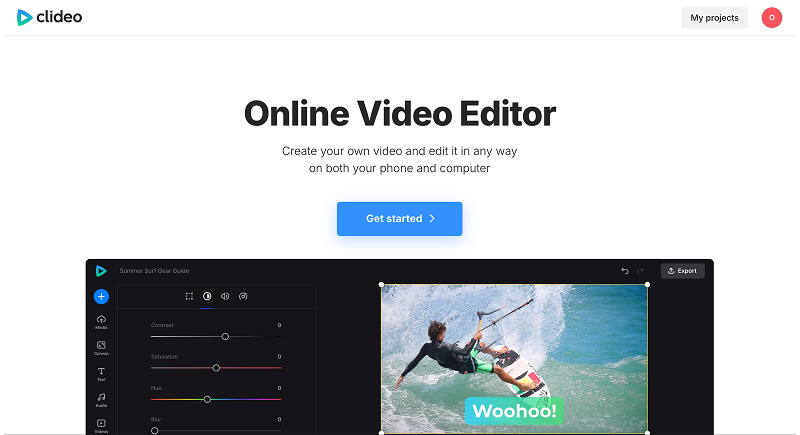
Click "Get started" and upload your media. For our cat adoption project, that means:
- Video clips of cats playing, being petted, or exploring their environment
- Photos of each cat available for adoption
- Any stock images or footage you want to include
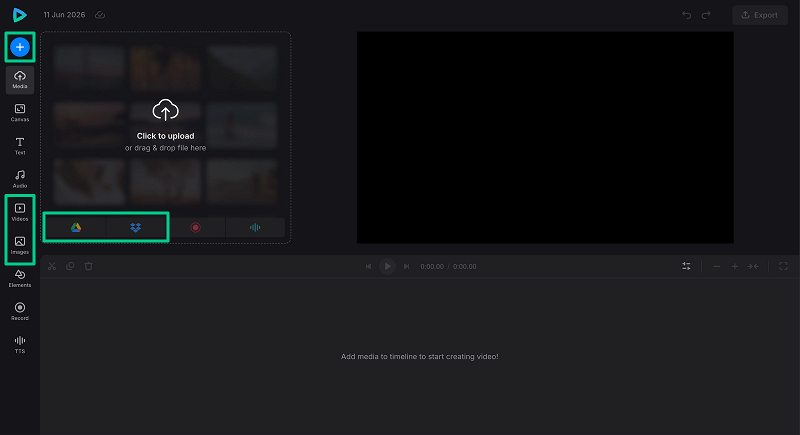
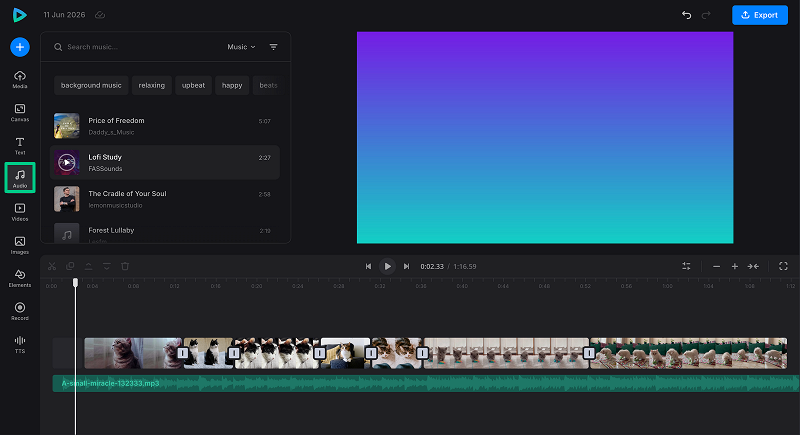
You can upload files from your device using drag and drop or import directly from Google Drive or Dropbox. Once uploaded, arrange the clips side by side on the timeline in the order you want them to appear - perhaps an intro clip, individual cat stories, and a closing call-to-action.
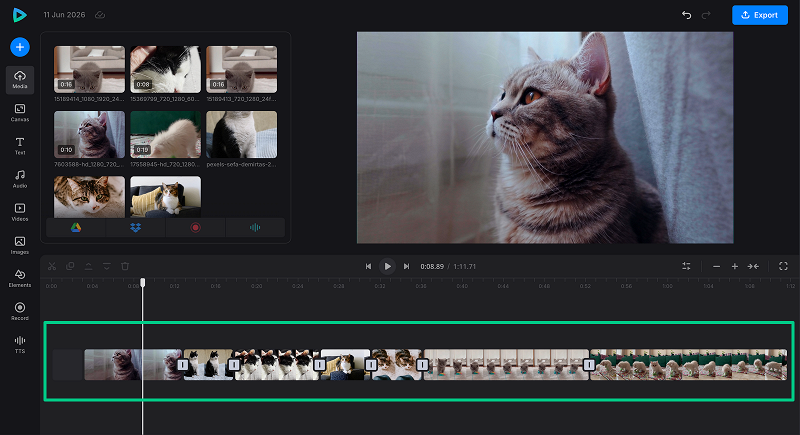
To set the mood, add background music from Clideo's free stock library. Browse by mood or genre and drop a track onto the audio layer of the timeline, then fine-tune it later using audio editing tools in the video editor.
-
Add video transitions
With at least two elements (videos or images) side by side on the timeline, you'll see a transition icon between each pair.
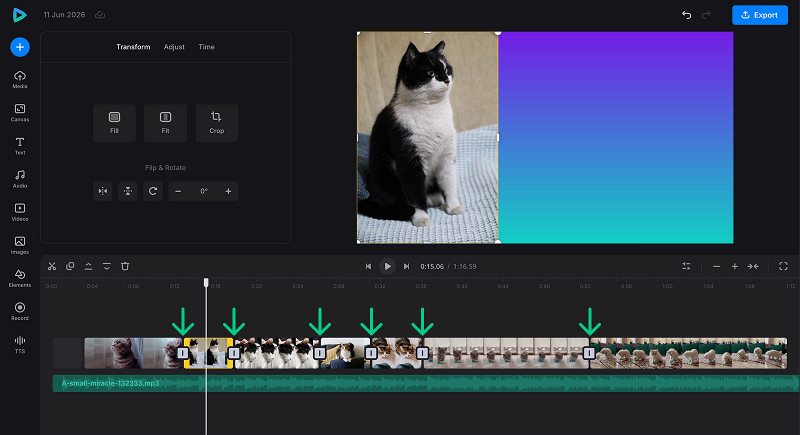
This is where you add transitions. To add a transition, click the transition icon located between two elements on the timeline. This will open the "Transitions" tab, displaying all available transition effects. You can live-preview and apply any transition by simply clicking on it or when you move the placeholder from one video clip to the next in the timeline.
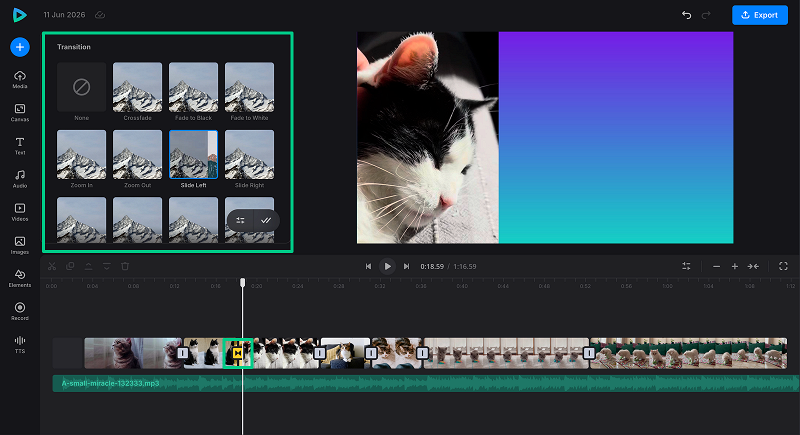
If you want to apply the same transition to all your video and image assets at once, click the "Apply to all" icon at the bottom right of the "Transitions" tab.
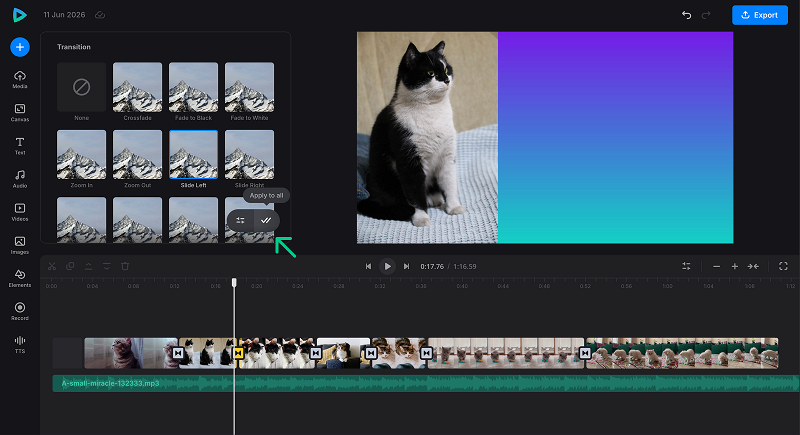
Don't hesitate to browse different transitions to find the right one for each moment, since the right effect helps support the video's mood. Try a gentle fade for the first scene to ease viewers in, or a playful wipe or slide transition between energetic cat clips, while a dissolve can work well between adoption stories.
-
Customize transition settings
Each transition has a default duration, but you can change it. Click the transition icon between two elements on the timeline. Then, click the "Adjust" icon at the bottom right of the "Transitions" tab. Then drag the slider to set the duration in seconds.
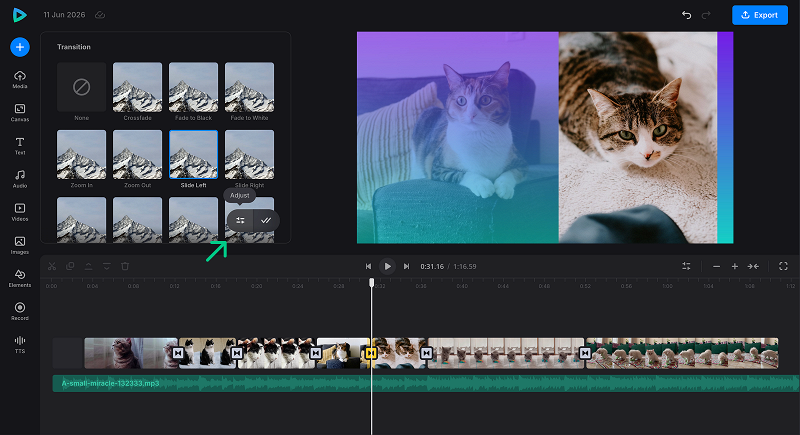
Use a shorter time for fast-paced cat play, like 0.3 to 0.5 seconds. For emotional moments, make it longer, around 1 to 2 seconds.
Preview your changes in real-time on the timeline. If a transition doesn't feel right, you can change it at any time. To remove a transition entirely, select "None" in the "Transitions" tab.
-
Add final touches and export
Adding extra touches like text, stickers, or voiceovers can really enhance your video and make your message even sweeter. These little additions will work beautifully with your transitions and help create a more compelling story, especially if you experiment with adding text in between video scenes as title cards or section breaks.
- Text overlays: Add each cat's name, age, and adoption details on screen.
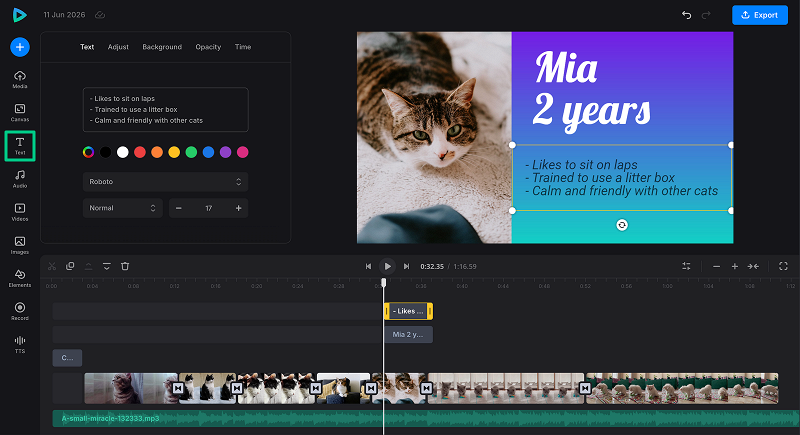
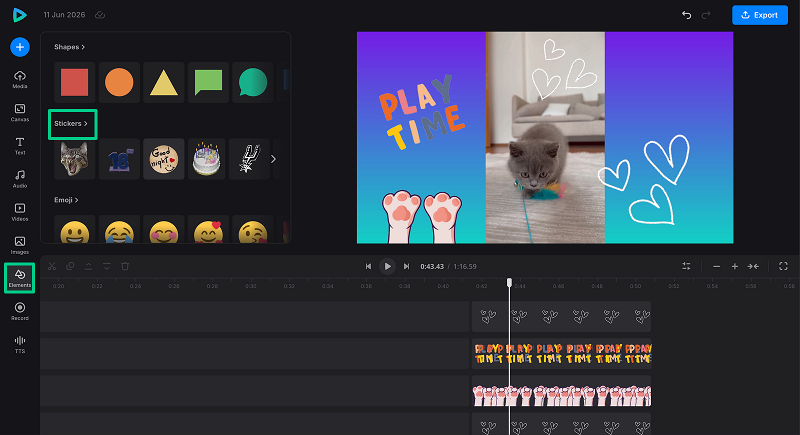
- Stickers and graphics: Drop in hearts, paw prints or callout graphics to add visual flair.
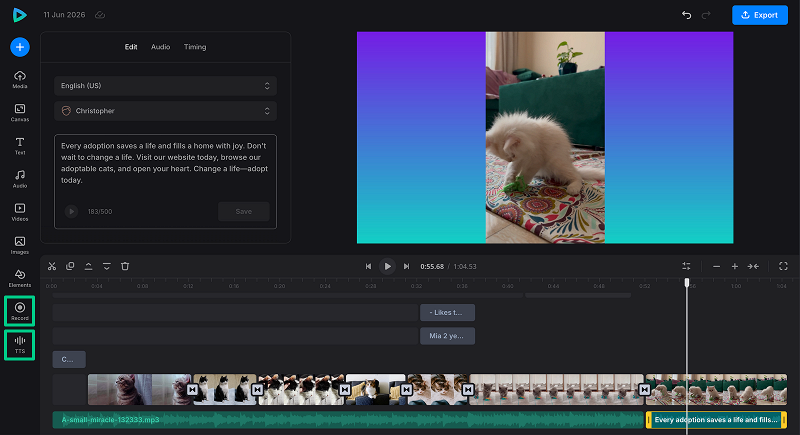
- Voiceover: Record your own narration in the editor or use AI text-to-speech (TTS) to generate a warm voiceover for each cat.
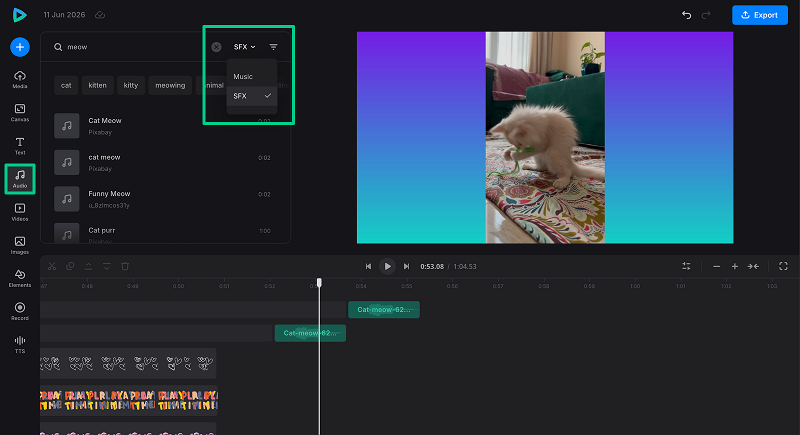
- Sound effects: Audio can enhance visual transitions with sound effects like swooshes or ambient noise - add a gentle chime between sections or soft meows for personality.
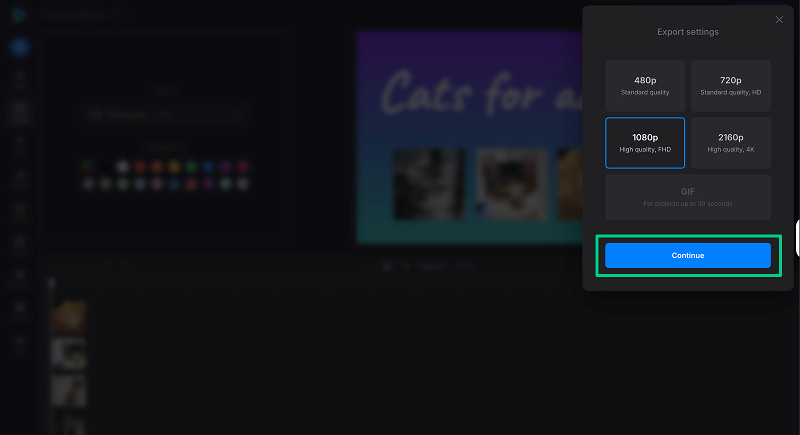
When you're happy, click "Export" and choose your resolution. If your original footage is of high resolution, you can export as HD and 4K, so your video looks crisp on social media, embedded on a website, or sent to potential adopters.
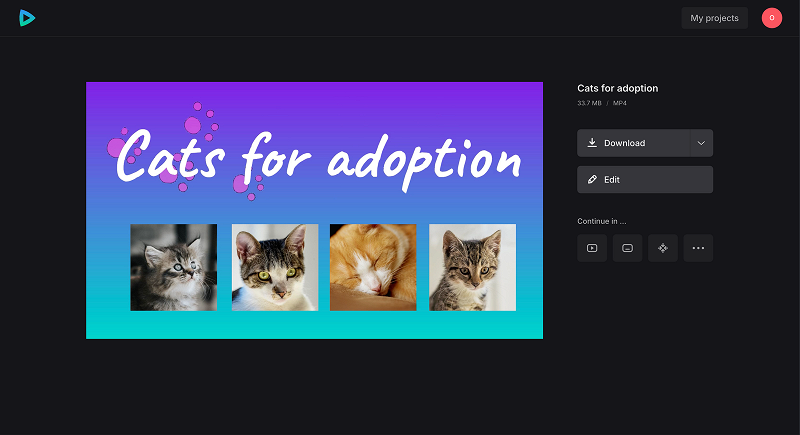
If you like what you see, download your project. If anything needs to be changed, click "Edit" to return to the editing screen. If you are a premium user, you can always find your project in your profile as well.
For other editing needs around your project, you can also explore Clideo's suite of online video tools like compressing, resizing, or merging clips. Should you have any questions, feel free to explore our Help Center for the latest details on all features.
Tips for making great video transitions
Transitions are more than just picking an effect from a menu. Here are some practical tips to get professional results:
Transition style and mood
- Match transition style to your video's mood. The best video transitions depend on the desired aesthetic, whether seamless or stylized. Gentle dissolves work for reflective content, while dynamic wipes suit dynamic content and can direct the viewer's attention without breaking the flow. Don't use a comedic effect on solemn footage.
- Use transitions sparingly. Transitions should be used sparingly to avoid distracting the viewer. Often, basic cuts are more powerful than fancy effects. Reserve creative transitions for moments that really need visual emphasis.
Pacing and consistency
- Mind your pacing. When editing, aim to keep a smooth rhythm by syncing the transition pace with the music or dialogue. Try to align visual cuts to the beat of the background music. In Clideo, pay close attention to the pitches in the audio track to clearly identify the beats and match your edits accordingly.
- Stay consistent. Use two or three transition types maximum per project. Mixing different transitions in one video creates visual chaos rather than professional polish.
Assets and planning
- Keep original files. Always keep your source footage separate. If you need to re-edit or adjust the transition duration later, you'll need untrimmed clips with enough handles. Though in Clideo, all you assets stay intact, no matter what you do with them and you can always revert to the original state.
- Plan transitions during filming. Dynamic transitions can be achieved during filming to minimize editing needs. A character moving past a doorframe, for example, creates a natural wipe between two scenes and you don't need to add anything extra.
- Use sound effects thoughtfully. Audio is key for transitions. Using sound effects can enhance the impact of video transitions - a subtle whoosh during a wipe or ambient noise bridging a dissolve adds depth that visuals alone can't achieve.
Testing and exporting
- Preview on multiple devices. A transition that looks smooth on your desktop monitor might stutter on a mobile screen. Test your final export on at least two devices before publishing.
A transition should help your video glide, not arrive wearing sequins and demanding a solo. Remember, good transitions whisper, "smooth move". Bad ones yell, "Look what effect I found".
Common mistakes when using video transitions
Even experienced editors fall into these traps. Here's what to avoid:
Overuse and inconsistency
- Overusing flashy transition effects. Too many video transitions - especially fancy ones - pull the viewer's attention away from your actual content. If the audience notices the transitions more than the story, you've gone too far.
- Inconsistent transition styles. Jumping between a dissolve, a wipe transition, a zoom, and a slide transition within thirty seconds creates a messy viewing experience. Pick a palette and stick with it.
Duration and fit
- Wrong transition duration. Beginner techniques rely on timing and standard software cuts to move seamlessly between shots. Transitions that are too short feel choppy; transitions that are too long drag the energy out of your video. For social media content, 0.3–0.8 seconds is typical; for longer storytelling, 1–2 seconds gives the edit room to breathe.
- Ignoring content-transition fit. A playful star wipe on a memorial tribute video undermines the emotion entirely. Every transition should serve the narrative and match the subject matter.
- Overcomplicating simple content. A talking-head vlog rarely needs anything beyond straight cuts and occasional fade transitions. Using complex special effects transitions for simple content wastes time and distracts the viewer.
Technical issues
- Skipping the full preview. Not watching the complete video before export means you'll miss timing misalignments, visual glitches, or moments where a transition cuts off important content.
- Forgetting platform constraints. Different platforms compress video differently. Match Lighting minimizes abrupt lighting changes between cuts to maintain visual consistency - this matters even more when platforms re-encode your video and amplify any existing visual inconsistencies.
To sum up, just because an effect exists in the menu doesn't mean it deserves screen time. Make sure each transition supports the story instead of competing with it, unless your goal is to create a cringe compilation by accident.
Most video editing tools, including Clideo, accept common formats like MP4, MOV, AVI, and WebM. You can add transitions between any combination of video clips and images within supported formats. If your file isn't accepted, converting it to MP4 first usually resolves compatibility issues.
There's no rule of thumb, but restraint is key. Transitions guide the flow of the narrative in videos - use them at natural breaking points between scenes or segments. For a 2-minute video, 3-6 transitions are usually enough. The number of video transitions in your video depends on its length, pace, and purpose.
For Instagram Reels, TikTok and similar short-form platforms, keep transitions between 0.3-0.8 seconds. For YouTube videos or longer storytelling formats, 1-2 seconds gives the viewer time to register the shift. Standard film dissolves usually run 24-48 frames (roughly 1-2 seconds at standard frame rates), which also works well when you edit a YouTube video as a beginner.
Yes. In Clideo, clicking any transition in the "Transitions" tab previews it immediately. You can try different transitions and swap them freely before exporting - nothing is permanent until you finalize and download the file.
Transitions themselves add minimal file size since they're computed from existing frames rather than adding new media. However, longer videos with many clips may produce larger export files.
In Clideo, click the transition icon between the two elements on the timeline. To change it, select a different effect from the "Transitions" tab. To remove it, select "None". Use the "Apply to all" option to remove or change transitions across every adjacent pair in the project simultaneously.


