



How to Make a Video Mashup Online
Creating video mashups involves combining two or more videos with audio and visuals to produce a new, inventive piece that gives old videos new life.


You've encountered them all over, right? All those amazing video compilations that mash up several movies, songs, and clips together, creating something brand new and awesome. Looking to combine your favorite movie scenes with that awesome song that you just can't stop thinking about? Or perhaps, a K-pop masterpiece to literally drive K-pop fans crazy? The good news: It's not as difficult as it sounds! It does not require some expensive pro software, a computer more expensive than your car, or a film degree. Everything you need to know to create your very first mashup video, from the basics of the art form to making a video look great for X/Twitter.
Understanding video mashups
Well then, what is a video mashup? (Great question!) It collects clips from movies, TV shows, music videos, fan recordings, live shows, and more, and compiles them into something that has a totally new meaning. Video mashups are simply the process of combining several video clips and audio files into a single video that conveys a completely new message, serves a theme, or simply paves the way for entertainment. The secret is to not just slap clips together like a sandwich, but to think about them in a new way – add new contexts to characters, mash different worlds, or just supercut the things that you see in common across various media.
Types of video mashups
Video mashups come in various styles, each with its own unique flair and purpose. Understanding these types can help you decide what kind of mashup you want to create:
- Tribute mashups. These celebrate a favorite actor, musician, or fictional character by compiling their best moments, iconic scenes, or memorable performances. Fans often use these to show admiration and connect with others who share their passion.
- Genre mashups. This type blends clips from different genres or universes to create surprising or humorous contrasts. For example, mixing scenes from a sci-fi movie with a romantic comedy to create a fresh narrative or comedic effect.
- Music video mashups. These synchronize video clips from various sources to a particular song or soundtrack, aligning visuals perfectly with beats, lyrics, or mood. They are popular among music fans and creators who want to reinterpret songs with new imagery.
- Parody and satire mashups. These mashups remix footage to create humorous or critical commentary on the original content, often using irony or exaggeration to make a point.
- Supercuts. A collection of similar moments or themes from multiple videos, such as every time a character smiles or a specific catchphrase is said, compiled into one cohesive video.
- Fan fiction mashups. These mashups tell new stories by combining clips from different movies, shows, or games, imagining "what if" scenarios or alternate universes.
Each type offers a different creative challenge and appeals to different audiences. There is amazing mashup video content available all over the Internet, YouTube, TikTok, Twitter/X, Instagram Reels, Reddit communities, Tumblr, and those special fandom websites (you know the ones).
Who creates mashup videos
What's great about this art form? Pretty much anyone can jump in and create one. The most common creators are:
- Fans creating tribute videos for their favorite actors, musicians, anime characters, or fictional worlds. But TV show fandoms, movie franchises, and K-pop fandoms are particularly active (and oh, do they have opinions to express!).
- You have social media influencers and content creators churning out viral entertainment content, hoping to keep their audience entertained and engaged and to maintain and increase their following.
- Amateur video editors learning how to do storytelling, visual effects, and editing for a creative outlet.
- Students and hobbyists learning video editing by completing creative projects (mashups are a fun way with a pretty gentle learning curve).
There are mashup artists who remain amateurs, and others who, over the years, become quite professional. What do they all have in common? Passion – this intense urge to say something about something they really love, the media.
Main features of video mashups
What makes a great mashup a great mashup? (Another excellent question!) The form features some important characteristics, and tools like Clideo's all-in-one online Video Editor make it easier to bring these elements together in one browser-based workspace:
- Integrated storyline, theme. Though you've obviously got nothing to do with the visuals, a good mashup will make clips fit into a narrative or a character arc, a change of genre, or a look at some more profound message.
- Music synchronization. Aligning visual clips to the tempo or lyrics of background music carefully is absolutely central to the craft. The best mashups make you think that the footage was shot especially for the song.
- Creative editing techniques. Match cuts, rhythm editing, speed ramping, split-screens and crossfades are all significant factors. The thing is, though, the technique should serve the emotion, not showcase.
- Cultural references. The attraction of mashups is that they are often recognizable – that moment when you realize that a shot from one movie is now in front of another is one of great surprise and delight, and it really connects to a certain fan base.
- Visual consistency. Resolution, aspect ratio, and color grading differences among sources are always a problem, yet a beautiful result is very important with no eye damage.
How to make video mashups using Clideo
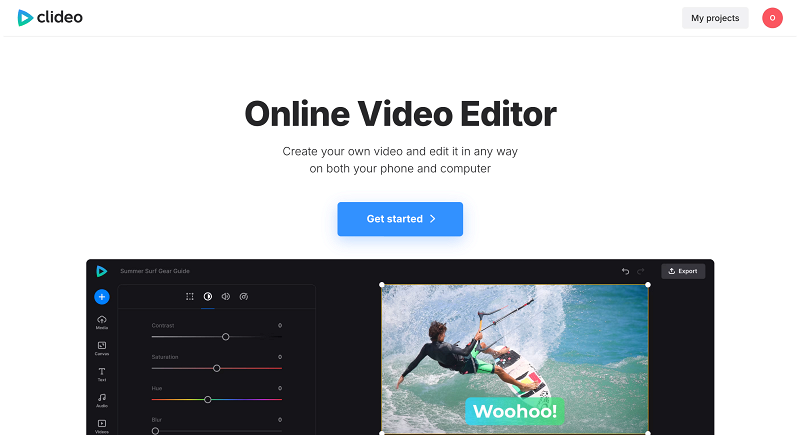
Clideo's all-in-one Online Video Editor allows you to create mashups, no software download required (yep, that means no software is clogging up your computer!)! The browser-based platform is available on all modern devices that have an Internet connection and offers transitions, music libraries, text overlays, and other editing options.
-
Upload your media
The key to a good video mashup is to get all the clips and sound you can, so collect all the clips and sounds you can.
Once Clideo Video Editor is opened in your browser, click "Get started" to start your project. Upload multiple video clips or images from your device, Google Drive, or Dropbox. Most common video, audio, and image formats are supported by Clideo, which means compatibility issues are unlikely to arise.
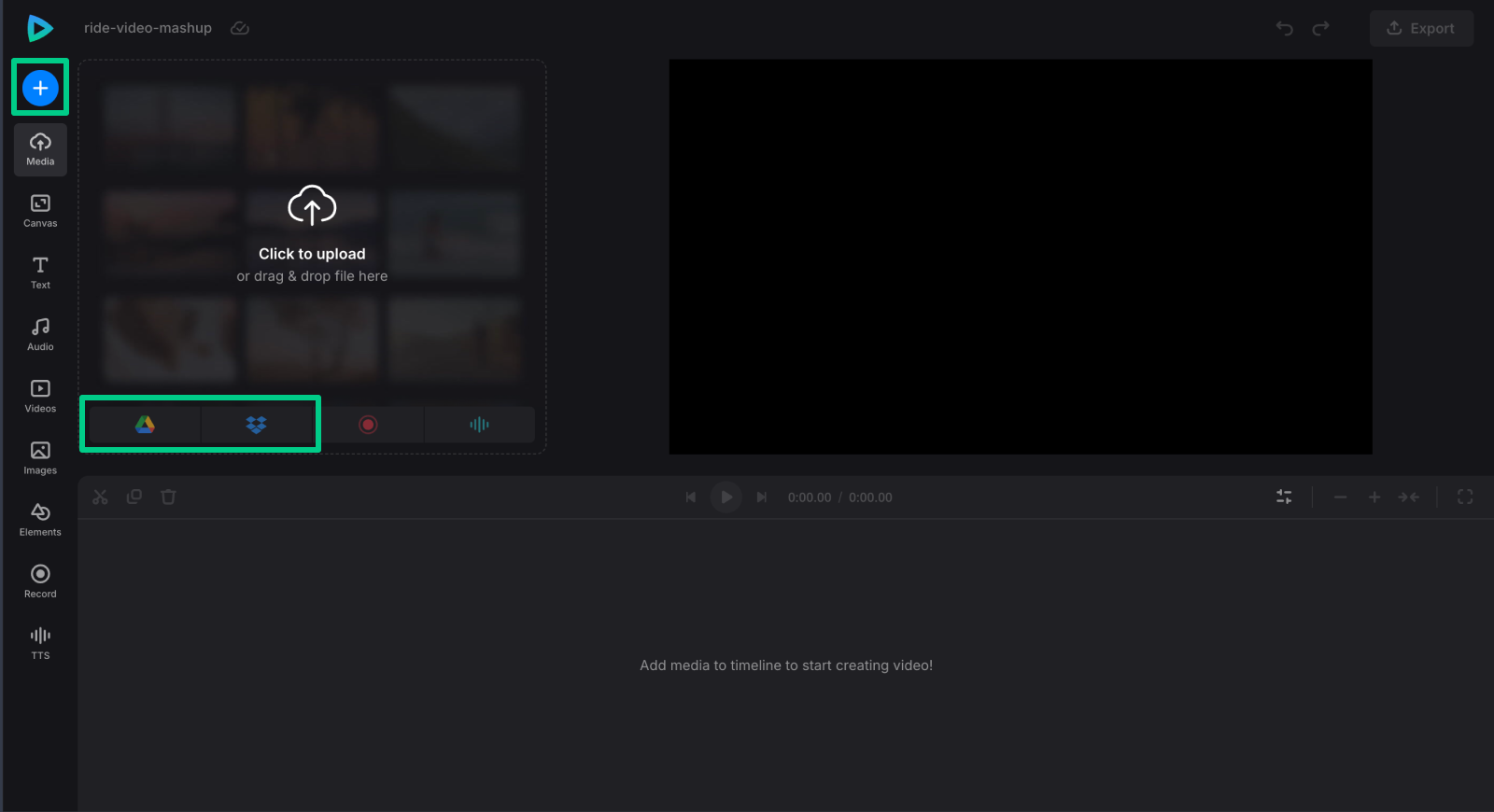
Add the music tracks or audio clips that will make up the mashup soundtrack. You can even upload a video and extract its soundtrack to reuse in your project.
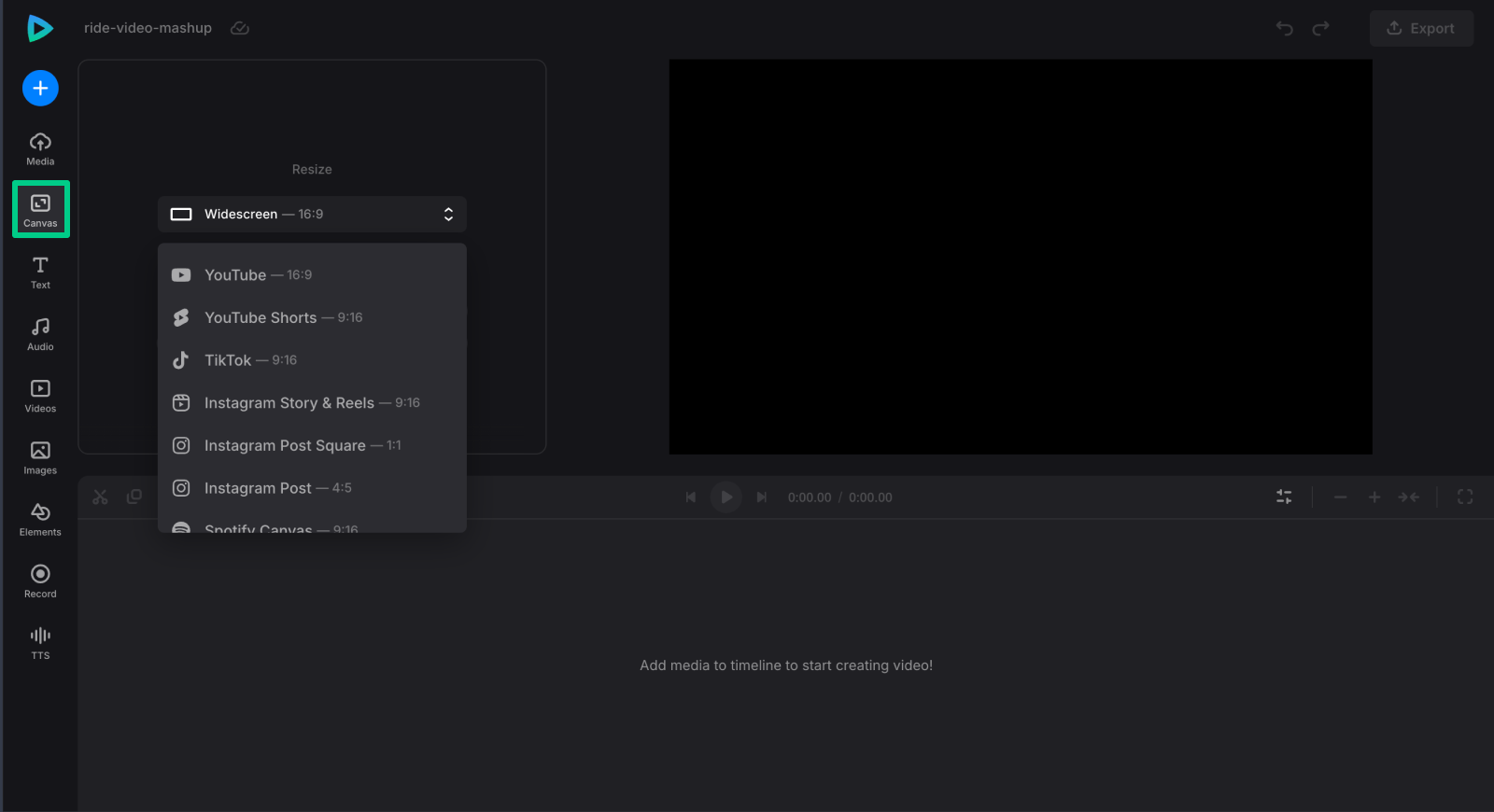
When uploading, bear in mind X/Twitter's ideal video dimensions: 1280×720 resolution (landscape 16:9), a max file size smaller than 2GB, and a max video length of 2 minutes and 20 seconds. To maximize engagement, try to keep your content between 30 and 90 seconds – human attention span is not as long as it was! Use the "Canvas" tab to set the required aspect ratio.
-
Organize and edit clips
After your media is uploaded, drag and drop video clips on the timeline in the order you would like. Rearrange clips by dragging them on the timeline – see your story come to life before your eyes through the visual layout.
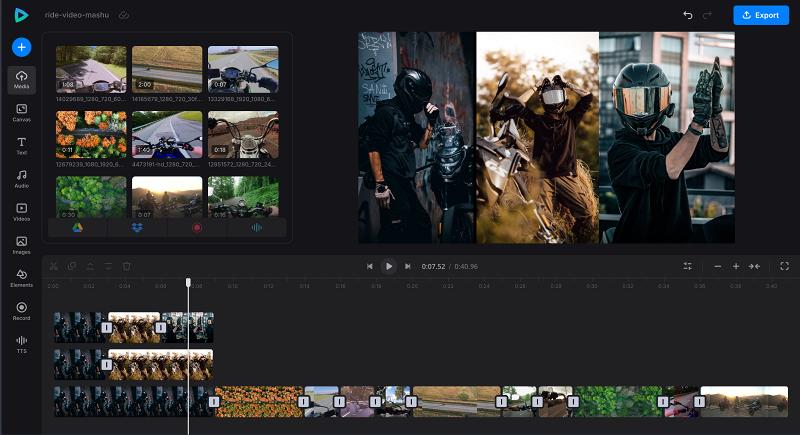
Trim out the unwanted parts and retain only the very best moments from every clip by dragging the yellow handles. Use the placeholder bar and split into smaller segments to remix and rearrange.
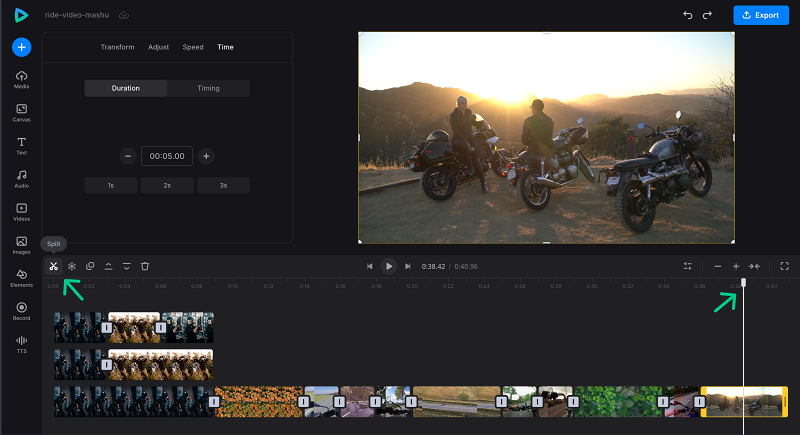
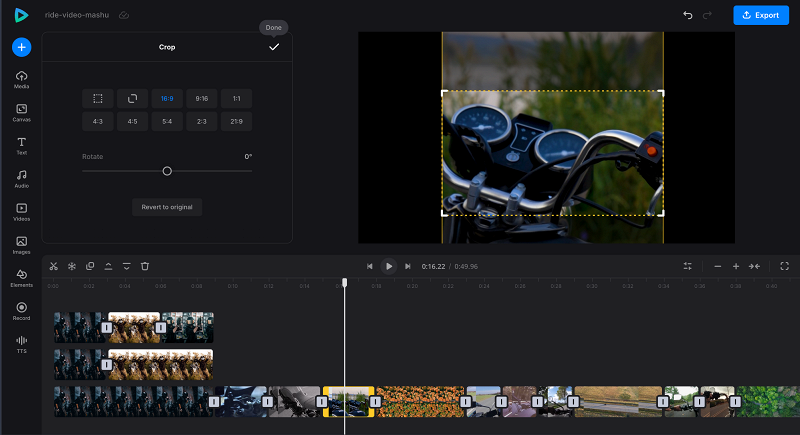
If the clips you're using have different aspect ratios, you can crop or resize them to fit X/Twitter's 16:9 landscape format. Make sure the backgrounds and fills or fits are adjusted to create a consistent look from clip to clip – no one wants an uncomfortable viewing experience.
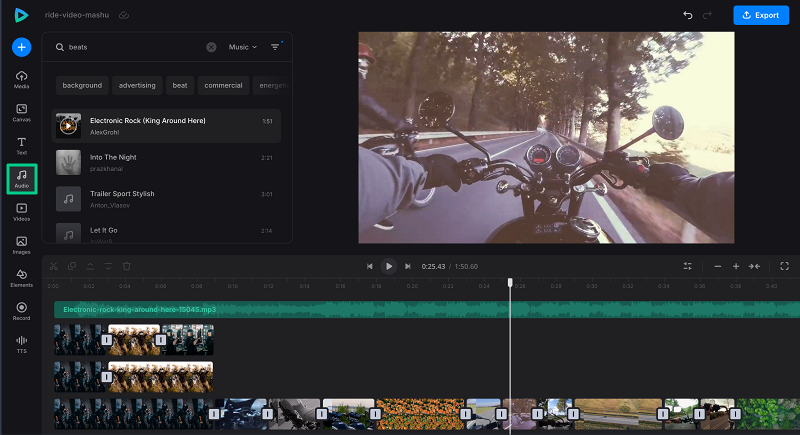
Move your soundtrack in the timeline and make sure that the music volume levels are appropriate with any original clip sounds that you wish to retain. If the music is the thing, you may want to reduce or eliminate the original video audio altogether, using dedicated features for editing audio in Clideo's video editor to fine-tune volume.
-
Add smooth transitions
Now you're beginning to get your mashup into the swing of things (and look more professional too!). To get access to the transitions menu, click between two clips on the timeline.
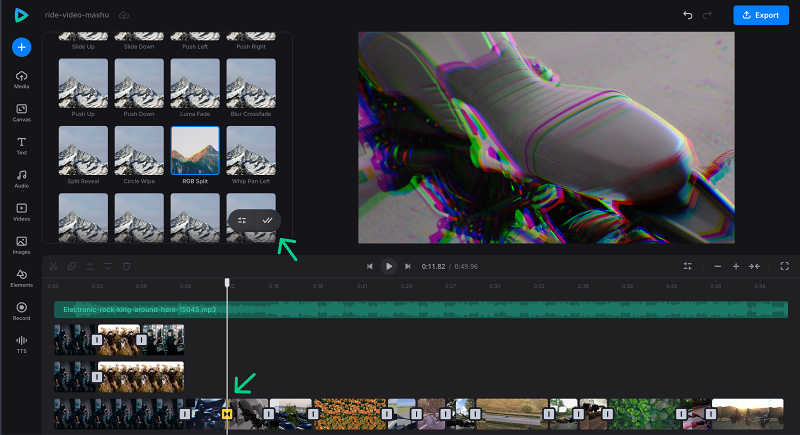
Choose from Fade, Crossfade, Slide, or Zoom for seamless transitions between clips. For more motion, try more dynamic options like RGB split, Luma Fade, or Whip Pan. You can apply the same transition to all adjacent elements by clicking the "Apply to all" icon at the bottom right of the "Transitions" tab.
Set the transition duration to match the pace of your video – 0.5 to 2 seconds is best for mashups. For a high-energy, beat-driven sequence, opt for shorter transitions, and for emotional or dramatic shifts, opt for longer crossfades. Select the transition you want to adjust and click the settings icon at the bottom right of the "Transitions" tab. Then drag the slider to change the transition speed
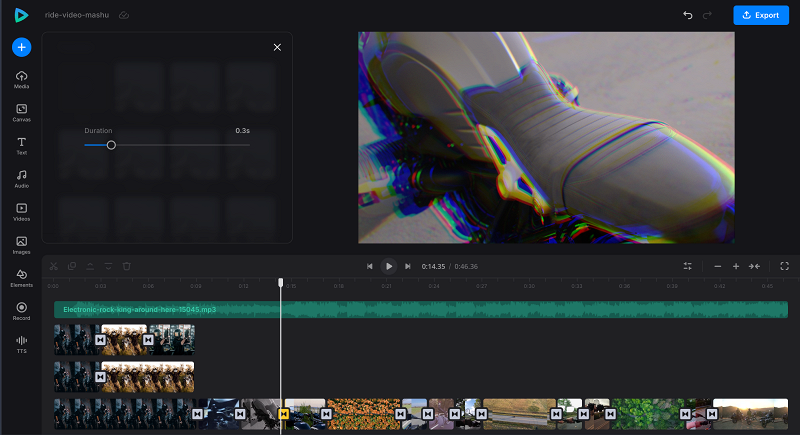
Test preview every transition to ensure that they add to and not detract from your story flow. The point is no editing – your viewer should feel the emotion, not notice the pretty trick you pulled off.
-
Fine-tune and export
Now that your clips are lined up and your transitions are added, it's time for the finishing touches.
Include text overlays where necessary to provide context, quotes, character names, and/or dramatic effect, or add text headings between scenes in your video to guide viewers through different sections. Clideo is customizable in terms of font, size, color, and positioning – make it your own!
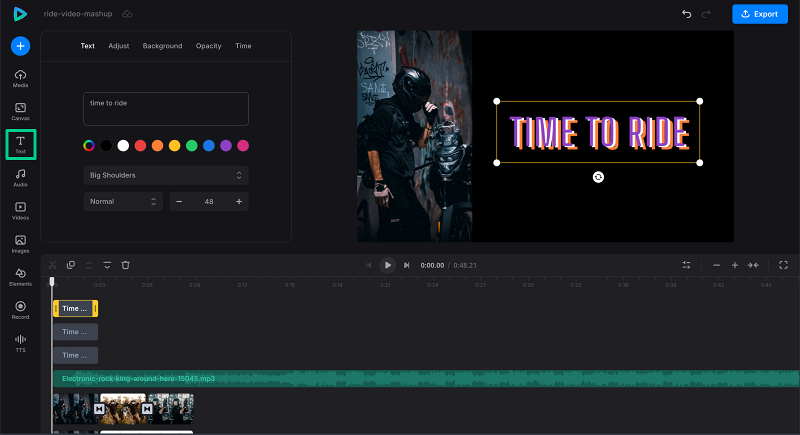
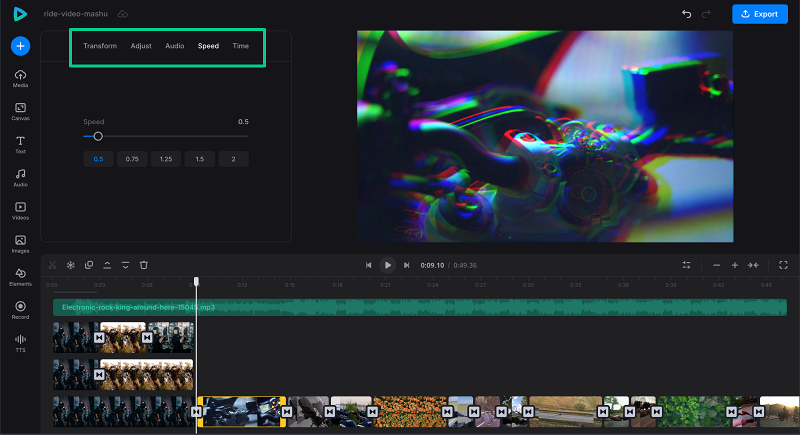
Make speed adjustments to align each clip's speed with specific beats in the music (use the waveform to identify them) or with specific moments of emotion – slow motion for dramatic reveals, speed-ups for energetic moments.
Replay your entire mashup in the built-in player, listening for audio balance, checking transition smoothness, and assessing overall pacing. Open the project on your mobile (you need to be logged in when creating the project to open it in your mobile browser) and test on a mobile device, as the vast majority of users on X/Twitter view their feed on mobile.
Once you are happy with it, click "Export" and select quality options. The export options are SD, HD, FHD or 4K for Clideo – for X/Twitter, HD or FHD (MP4 format) is the best compromise between quality and file size.
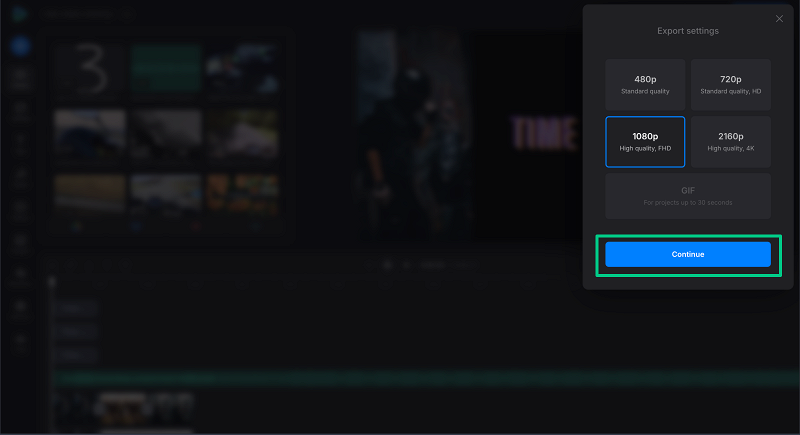
Export your mashup and download the MP4 file, then post it to X/Twitter to share your masterpiece with the world!
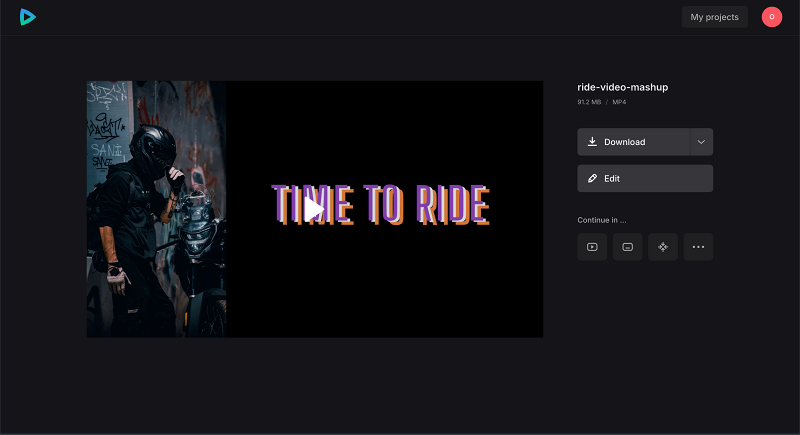
We regularly improve our tools to add new features or enhance your experience. Check our Help Center for the most recent instructions.
Why choose Clideo?
- No software installation necessary – it works immediately in any modern browser.
- Easy-to-use UI and a low learning curve, ideal for novice users and casual creators looking to avoid spending weeks learning complicated software and multiple editing panels across the screen.
- In-built transitions and stock media libraries with videos, images, GIFs, stickers, and emojis for improved mashups.
- Clideo also provides 20+ mini tools for certain editing chores, outside of the main editor, like Video Compressor, Audio Cutter, or Video Translator.
- Works with various file formats – one less worry!
Alternative tool for video mashups
If you are looking for some video editing alternatives, here are some more options you can also try out.
Desktop video editing options
iMovie (Mac) – This app is free and is already installed on all Macs and iPhones. It contains a drag-and-drop timeline, transitions, text overlays, audio syncing, split screen, and picture-in-picture – all the tools necessary to create fan tribute mashups. iMovie is a great balance between control and ease-of-use, perfect for creators who want to create offline on their computer.
Microsoft Clipchamp (Windows) – Clipchamp is integrated into Windows 11 and is also available as a free download, aimed at those who don't have any editing experience. It also allows you to mix video, images, and audio, add transitions, and export to formats appropriate for social media.
Both have offline editing, no file size restrictions, and decent quality for those who like to create mashups the old-fashioned way rather than online.
Online video editing mini tool from Clideo
If you just want to quickly join clips without any editing, trimming, or cropping, Clideo's Video Merger is an excellent lightweight tool. It lets you combine multiple video clips, add background music, apply a crossfade between clips, and create a simple mashup in minutes.
Tips for better video mashups
To build mashups that are going to really be noticeable on any platform, here are some tips:
- Keep your mashup focused in terms of narrative. Find a good theme or storyline that ties all of your clips together in a logical way – maybe a character's emotional arc, or maybe the actor's greatest performances, or maybe a mishmash of two different genres that turn everything upside down. Even a funny, lighthearted mashup needs a logical or emotional flow.
- Match the key visual moments to music beats. The study of BPM and Key is of paramount importance for a good song combination. Set dramatic moments, action points, or emotional payoffs on strong beats in music. Take advantage of the audio waveform in your editor for visualizing beat placement to give you precise timing; your ears will thank you for it!
- Vary your pacing. Longer shots for emotional impact, quick cuts for excitement and energy. Too many short clips can wear the viewer down, and too many longer clips can bore them like a lecture. The difference provides a rhythm that keeps people interested.
- Pursue visual consistency. Mismatched clips from various sources can seem extremely displeasing when it comes to contrast, color correction, and aspect ratio. If possible, adjust brightness, contrast, and saturation to display a consistent look throughout your entire mashup.
- Avoid using too many transitions and effects. Fades and crossfades are very effective for emotional changes. Use flashier transitions only when they are warranted – don't insert a fancy whoosh every time you cut to a different scene. Too many gimmicky effects take the focus off your content and onto the effects themselves.
- Limit text overlays to being purposeful. Use text where it enhances the meaning (such as character names, iconic quotes, and dramatic timestamps). Use easy-to-read fonts and never obscure any significant visual (no one likes to squint and read small text).
- Balance your audio. Ensure all music and any original video soundtrack are well balanced. Decrease background noises when dialogue or film sound is important. Don't jolt viewers with volume jumps – fast enough that they can't get the word "audio nightmare" out of their mouths.
- Start small. A 30-60 second mashup is much easier to handle and perfect than a five-minute epic. Longer projects won't help you develop your style and workflow as much as shorter projects will.
- Watch and study. Take some time to view your favorite mashup artists and observe how they execute their edits (when they cut, which transition they like, how they create those emotional beats that affect you right in the feels).
Common mistakes when creating video mashups
Despite some amazing source material and a great idea, a few things can go wrong and spoil your mashup, and we have all been in the same predicament:
- Bad audio mixing, where music is drowning out dialogue or the sounds from the original clips, and it is not a pleasant listening experience, therefore making people click on the screen and move on. Always check audio balance before exporting – your ears aren't lying to you!
- Transitions that don't flow with the show, but rather hinder the viewing. If the transition is done in a way that catches people's eye negatively, it may not be the right transition choice at that particular moment.
- Visual inconsistencies in mixing with different resolutions, aspect ratios, or color grades. This creates a disjointed effect and seems amateurish – which is not the impression you want to give.
- Excessive use of effects and transitions that detract from the story line. Restraint is an important editing skill, and one that is more difficult than it sounds.
- Not using pacing and rhythm – leading to rushed or extended mashups. There is no dead weight rule - every clip needs to have a reason to be in the timeline.
- Selecting clips that are inconsistent with the main idea and/or mood. A mashup is not just a hodgepodge of funky moments – it needs that glue that holds it together.
- Failure to do final video testing on other devices and screen sizes. What may appear incredible on your computer screen may seem totally different on a phone screen, where most of your audience will see it.
- Forgetting platform requirements. It is annoying to put in all that effort only to be told that you have exceeded the length limits, file size, or format.
Legal aspects of mashups
Nearly all mashups contain copyrighted material, and having a grasp of the legalities of this is important before you post or share your mashup, and no one wants a lawsuit, do they?
- Always research the copyright status of your source material before sharing publicly. Mashup artists may violate copyright law without permission, even when creating non-commercial fan content.
- The Copyright Act of 1976 protects original works in the U.S., covering the films, TV shows, and music recordings you might use. Fair use allows limited use of copyrighted material for criticism, commentary, parody, and transformative purposes - but it's a defense, not a guarantee. EU law also permits limited use of copyrighted material for parody, though specifics vary by country.
- Platform enforcement is real. Copyright infringement can lead to account bans on YouTube and content removal on other sites. YouTube's Content ID system frequently flags mashups, and the copyright owner may block, monetize, or track your video.
- Consider safer alternatives. Use royalty-free music or tracks with Creative Commons licenses. Stem separation allows you to create mashups with isolated vocals, which can help you work with licensed or original audio. Credit original sources when possible and add disclaimers about fair use intentions.
Video mashups combine two or more videos and audio tracks from different sources to create a new, inventive video with a fresh narrative or theme. They often blend diverse elements like movies, music, and fan footage to produce something unique. Video edits, on the other hand, usually involve modifying a single video source by trimming, adding effects, or enhancing it, without necessarily combining multiple unrelated clips.
For social media such as X/Twitter, target 30-90 seconds to hold the audience's attention (did I mention attention span?!) The length of a YouTube mashup can be extended to 2 to 5 minutes, but pacing has to be very strong to keep people watching. The ideal length for TikTok and Instagram Reels is between 15 and 60 seconds.
Select the music track first. Highlight key moments or changes – chorus drop, tempo change, quiet moments, etc. Then choose clips that relate to those actions, in terms of both visual and emotional content. Use the audio waveform from your editor to see the beats and time them accordingly – it's like you have a map of your creativity. If necessary, alter clip speed to ensure that action occurs on the beat.
It all depends on the copyright of your source material and platform policies (sadly, it's complicated). For the most part, mashups based on copyrighted material will not be monetized – copyright owners will get there before you can say "fair use". When you're interested in monetizing the content, aim to create original content or use royalty-free content.
Learn about the theory, practice, and use of film editing skills – many books, video essays, and tutorials on montage theory can be applied to creating mashups. Try out various genre combinations and styles to be versatile; don't be limited to one way. Try out new editing tools and features frequently to broaden your skills.


