How to Translate Subtitles Automatically
Ever found a video or foreign movie that's exactly what you need, except it's in a language you don't understand? Translated subtitles can bridge that gap. And you don't have to copy every line into Google Translate to make them.


Whether you're sharing a tutorial with colleagues abroad, preparing a YouTube video for international viewers, or translating a clip for friends, Clideo's Video Editor lets you edit your video, add subtitles, and translate existing subtitles into another language. Here's how to translate subtitles, check the results, and save a video that's ready to share.
How subtitle translation works
Subtitles make video content more accessible to viewers who speak different languages or prefer to watch without sound. For creators sharing tutorials, training videos, or other online content, subtitle translation is a practical way to reach international audiences without recording a new voiceover. Additionally, subtitles can improve search engine ranking and visibility. And with AI-powered tools, the translation process no longer has to be time-consuming. For a broader look at subtitle types, formats, and best practices, see our complete guide to video subtitles.
Subtitle translation changes the text viewers read without changing the original audio. A subtitle track contains both words and timing information, so the translated lines can appear at the right moments in your video. That makes multilingual subtitles useful for training videos, tutorials, and other video content aimed at international audiences: viewers can follow along in their native language without replacing the speaker's voice.
There are two common starting points:
- If your video already has subtitles as a separate file. You can use an existing subtitle track or upload an SRT file, then translate its text into your target language.
- If your video has speech but no subtitles. You can use AI subtitle translators that can recognize the speech, generate subtitles, and translate them.
AI-powered translation saves time, but it's not a substitute for checking the result. Names, jokes, technical terms, and expressions that depend on context may need a human touch. For a closer look at the process, see our guide to subtitle translation, or learn more about how automatic translation works. If you need help creating the original subtitle track, see our guide to adding subtitles to a video.
How to translate subtitles with Clideo
You don't need to manually create a translated subtitle file and synchronize every translated sentence. The subtitle translation process can start with creating subtitles automatically, continue with choosing a target language for translation, and end with reviewing the translated text and timing. And you can do all three steps in Clideo's Video Editor. Here's how it works.
-
Upload your video
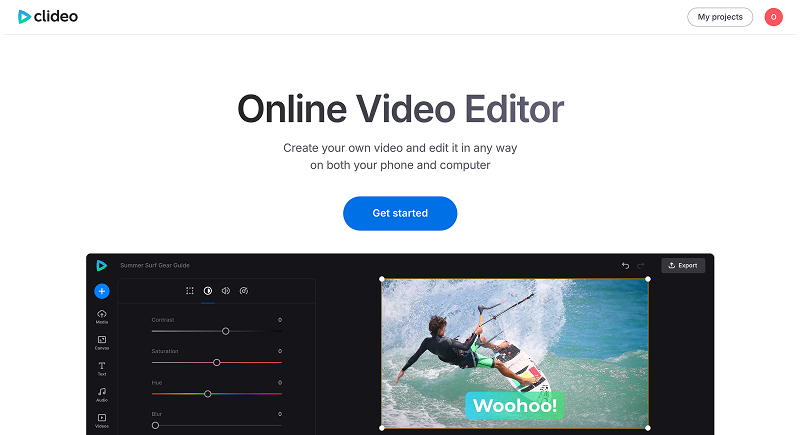
Open Clideo's Video Editor and start your project.
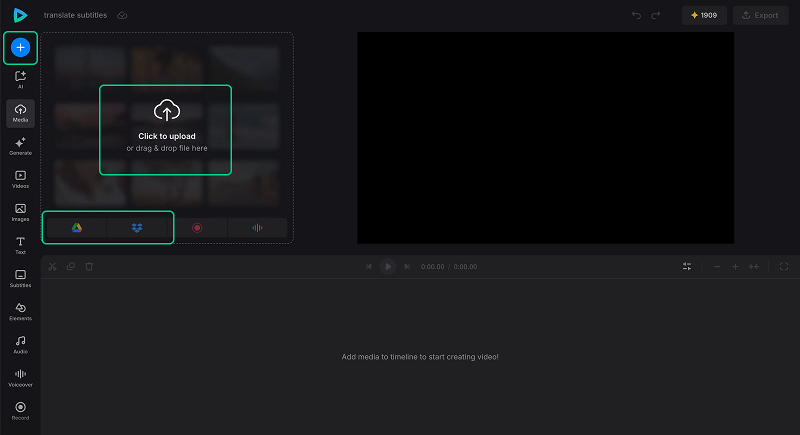
Then upload the video file you want to translate. You can drag and drop it onto the page or import it from your device or cloud storage. Clideo's Video Editor supports common video formats, so you may not need to convert your file first. If needed, you can use Clideo's video converter.
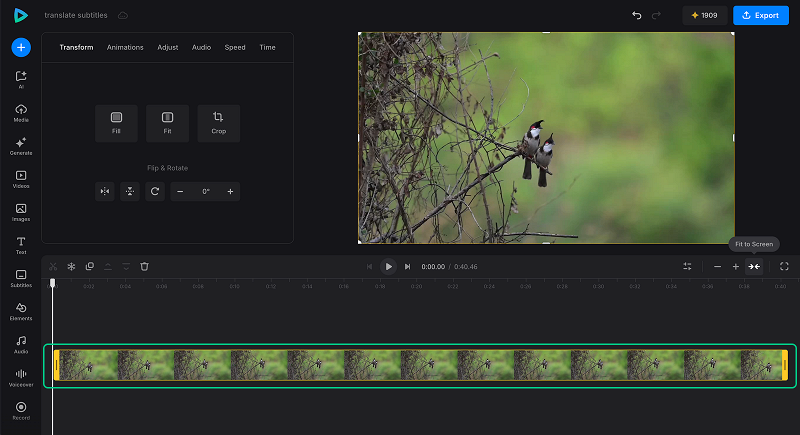
Once uploaded, the video appears on the timeline automatically. If you want to trim clips or make other edits first, you can do that before working on the subtitles. Our guide to Clideo's all-in-one Video Editor explains the basic editing tools.
-
Create subtitles
To create subtitles, select Subtitles in the sidebar, then choose Auto Subtitles.
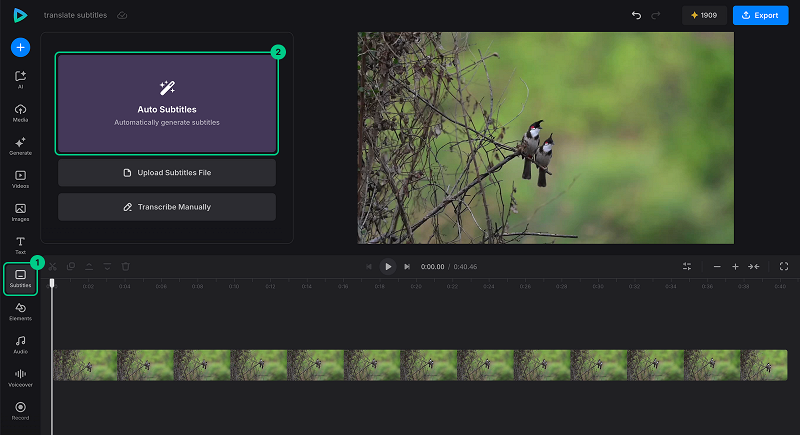
Under Original language, keep Auto-detect selected or choose the spoken language yourself.
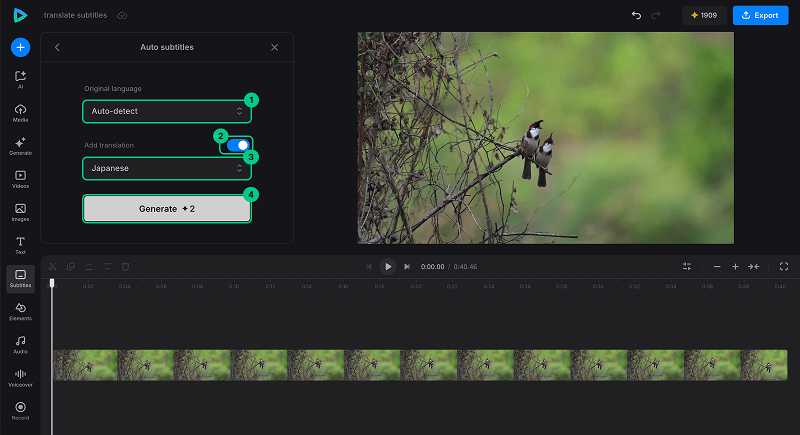
For the quickest option, turn on Add translation and select the language you want before clicking Generate. Clideo recognizes the speech and translates the subtitles in one operation. You'll see the translation right away. You can always switch back to the original-language version, which is retained in the same subtitle track.
-
Translate the subtitles
If you generated subtitles without translation or imported an SRT file, you can translate the existing track at any time.
Go to Subtitles, click the Tracks icon at the top left of the subtitles panel, then click Translate. Select the subtitle track you want to translate and the target language you want viewers to read. Click Translate to start and wait for processing to finish.
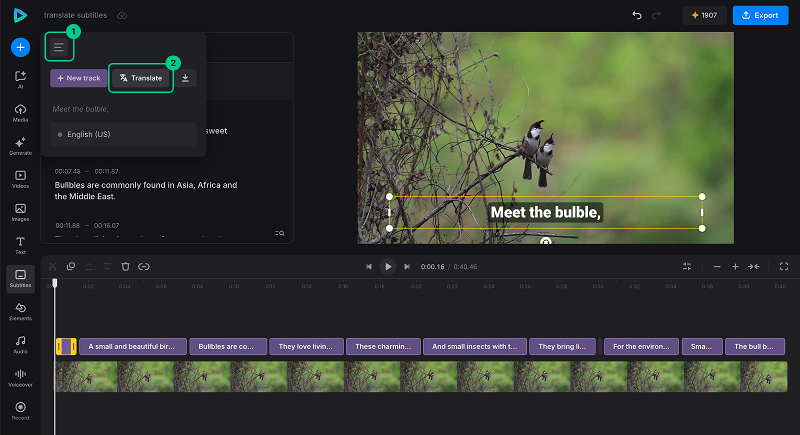
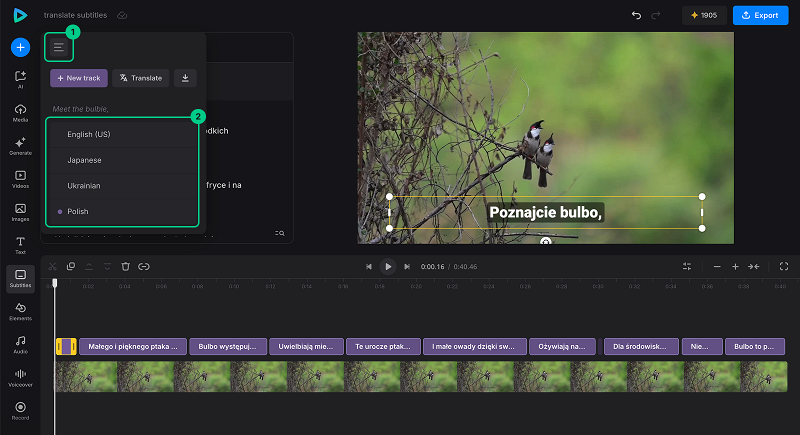
The translated version is added to the same subtitle track as the original language. Open Tracks again to see all the available language versions and choose which one to edit or display. This lets you keep multiple translations in a single track and switch between different languages, for example, between English, Japanese, Ukrainian, or Polish subtitles.
-
Display multilingual subtitles
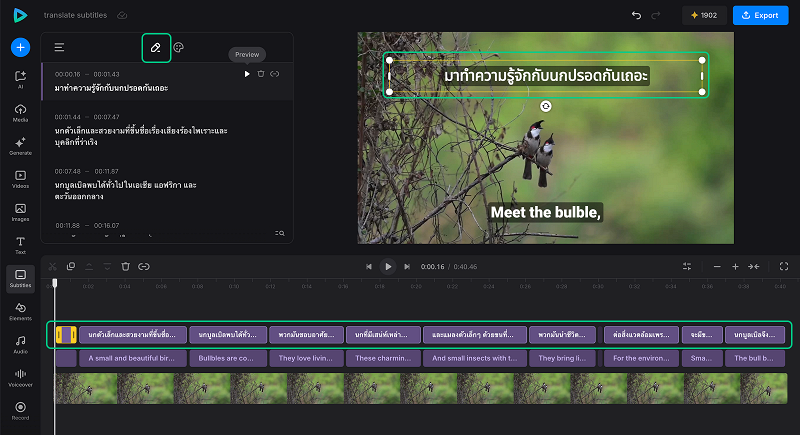
If you are creating videos for educational purposes, you can display several languages at once. To show two languages simultaneously, you need to have two separate tracks. To avoid running speech recognition again, download your existing subtitles as an SRT file and simply upload it again to create a new track. Translate that new track into any other language you need.
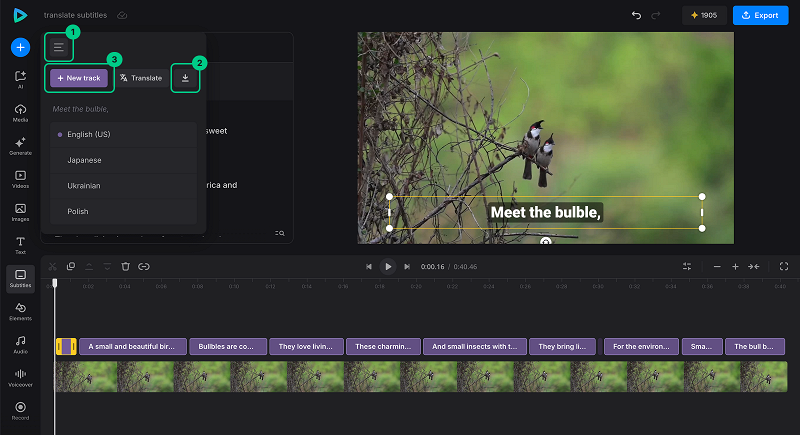
Then select the subtitles in the video preview and position each subtitle box where you want it to appear.
-
Adjust the appearance and timing
Play the video and check that each translated line appears when it should.
- Pay special attention to names, vocabulary, idioms, and lines that sound unnatural when translated word for word.
- Translation can change sentence length, so a subtitle that was easy to read in the original language may feel crowded in the new one. If a sentence becomes much longer in the new language, consider shortening it without losing its meaning.
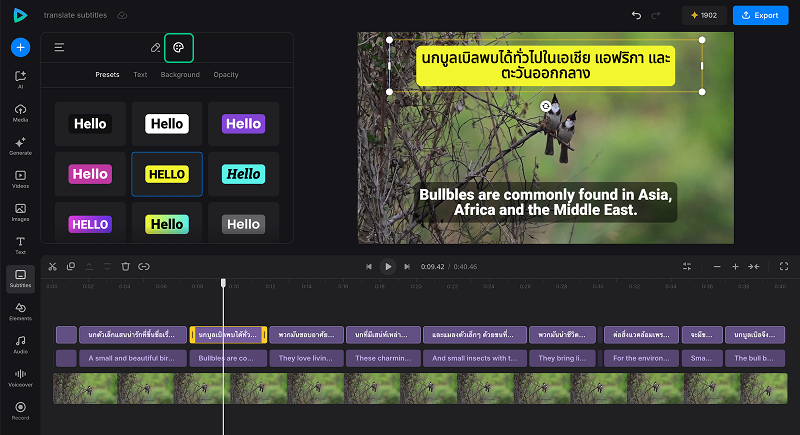
To change the appearance, open the palette tab: try a design under Presets, or customize Text, Background, and Opacity yourself. You can also drag the subtitle box in the preview to move it away from important visuals.
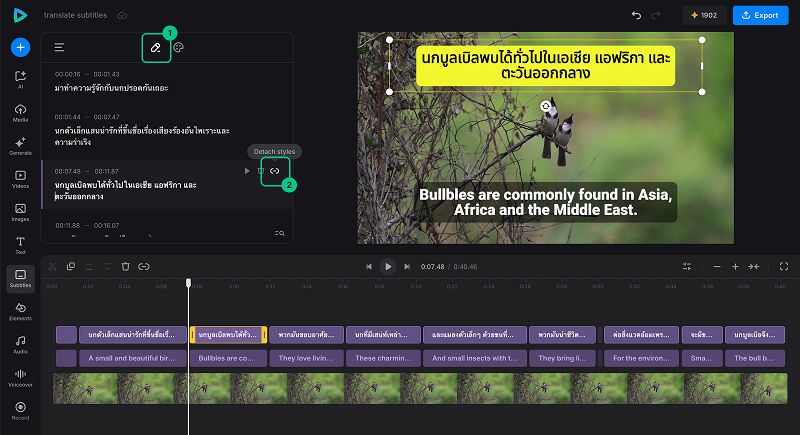
By default, changes made using Presets, Text, Background, or Opacity apply to the entire subtitle track. Want to highlight just one subtitle using another color or style? Select the segment you want to customize and click the Detach Styles icon, either in the controls to the left of the selected segment or next to its text in the Subtitles panel. Once detached, you can style that segment independently without changing the rest of the track.
-
Export your translated video
Watch the video once more, ideally with the sound off, to make sure the translated subtitles are easy to read from beginning to end.
Click Export, choose the resolution in Export settings, and select Continue.
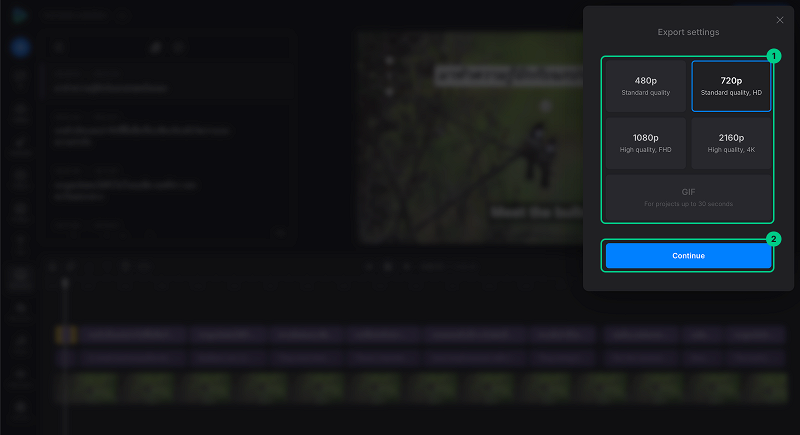
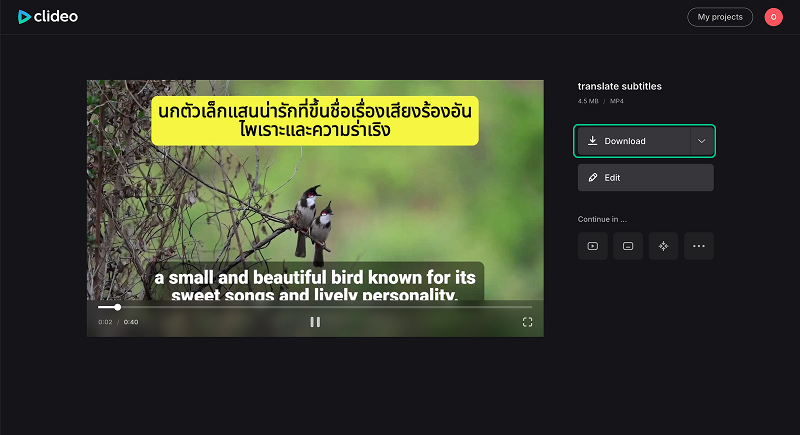
After processing, preview the result and click Download. The exported video contains embedded subtitles, so viewers can see the translation without loading a separate subtitle file.
Tips for better subtitle translation
A translation can be technically correct and still be difficult to follow on screen. These small checks help make video subtitles feel natural in the target language.
- Check the original text when accuracy matters. For a quick result, generate and translate in one go. If your video has names, unclear speech, or specialist terms, generate the original subtitles first, correct them, and then translate to avoid carrying errors into another language version.
- Translate the meaning, not just the words. Expressions, jokes, and cultural references rarely work word for word perfectly. Read the translated version as a viewer would, and edit awkward phrasing in Clideo's subtitle panel.
- Leave room for longer sentences. Some languages need more words or characters to express the same idea. Aim for no more than two lines at a time, and treat roughly 35–42 characters per line as a readability guideline rather than a strict rule. Break lines at natural pauses or between phrases, not in the middle of a name or expression. Adjust subtitle timing when a translated segment becomes hard to read.
- Check reading speed and synchronization. Play the video at normal speed, especially where speakers talk quickly or the scene changes. Viewers need enough time to read each line, and subtitles should stay aligned with the corresponding speech. Shortening repetitive wording often works better than squeezing a long literal translation onto the screen.
- Keep the text visible. Choose a readable preset or adjust the background and text styling. If your video includes graphics or other on-screen text, drag the subtitle box to a clearer part of the frame. Not sure which typeface to use? Check out our guide to choosing the best subtitle font.
If you're translating promotional videos, training materials, or online courses into multiple languages, consider having a fluent speaker or professional translator review the final wording. AI is a useful starting point, but a human review can help catch errors and preserve context, tone, and nuance.


